United States v. Grady
Grady told Wolf that he wanted to blow up a Planned Parenthood clinic, then drove to a gas station and put some gas in his van and a smaller amount in a bottle. He drove to the clinic, broke a window with a hammer, poured gasoline into the building, and set it on fire. After seeing news reports of the fire, Wolf informed police that Grady may have been responsible. The police questioned Grady in a videotaped interview. Grady admitted that his “intention was to light the building,” and that he told friends that “I thought it f... burned right down.” Grady was charged with arson and intentionally damaging the property of a facility providing reproductive health services. At trial, Grady reiterated his desire to burn the clinic and referred to his anti-abortion views. The parties disputed how to define the term “maliciously” under 18 U.S.C. 844(i) for jury instructions. Neither the Seventh Circuit Pattern Jury Instructions nor the court has defined the term. The district court used the government’s definition, explaining that Grady’s proposed instruction would shift the burden to the government to prove that the defendant acted without justification. The jury found Grady guilty. The Seventh Circuit affirmed. The court’s decision to omit the words “without just cause or reason” from the instruction was supported by the record. A jury instruction should address an issue reasonably raised by the evidence. Grady did not point to any cognizable legal justification for starting the fire.
| ||||||||||
Motorola Mobility LLC v. AU Optronics Corp.
Motorola and its foreign subsidiaries buy LCD panels and incorporate them into cellphones. They alleged that foreign LCD panel manufacturers violated section 1 of the Sherman Act, 15 U.S.C. 1, by fixing prices. Only about one percent of the panels were bought by Motorola in the U.S. The other 99 percent were bought by, paid for, and delivered to foreign subsidiaries; 42 percent of the panels were bought by subsidiaries and incorporated into products that were shipped to Motorola in the U.S. for resale. The other 57 percent were incorporated into products that were sold abroad and never became U.S. domestic commerce, subject to the Sherman Act. The district judge ruled that Motorola’s claim regarding the 42 percent was barred by 15 U.S.C. 6a(1)(A): the Act “shall not apply to conduct involving trade or commerce (other than import trade or import commerce) with foreign nations unless such conduct has a direct, substantial, and reasonably foreseeable effect on trade or commerce which is not trade or commerce with foreign nations, or on import trade or import commerce with foreign nations.” The Seventh Circuit affirmed, reasoning that rampant extraterritorial application of U.S. law “creates a serious risk of interference with a foreign nation’s ability independently to regulate its own commercial affairs.”
| ||||||||||
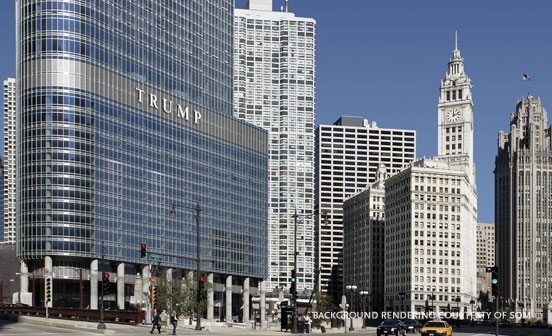
Illinois Social Media Law, Conservative News, Chicago & National Politics
Vote Trump 2016 !

Trump 2016
Friday, March 28, 2014
Daily Opinion Summaries U.S. 7th Circuit Court of Appeals


Subscribe to:
Post Comments (Atom)
No comments:
Post a Comment